Online vs In-Person Dental Second Opinion: Pros, Cons & How to Choose
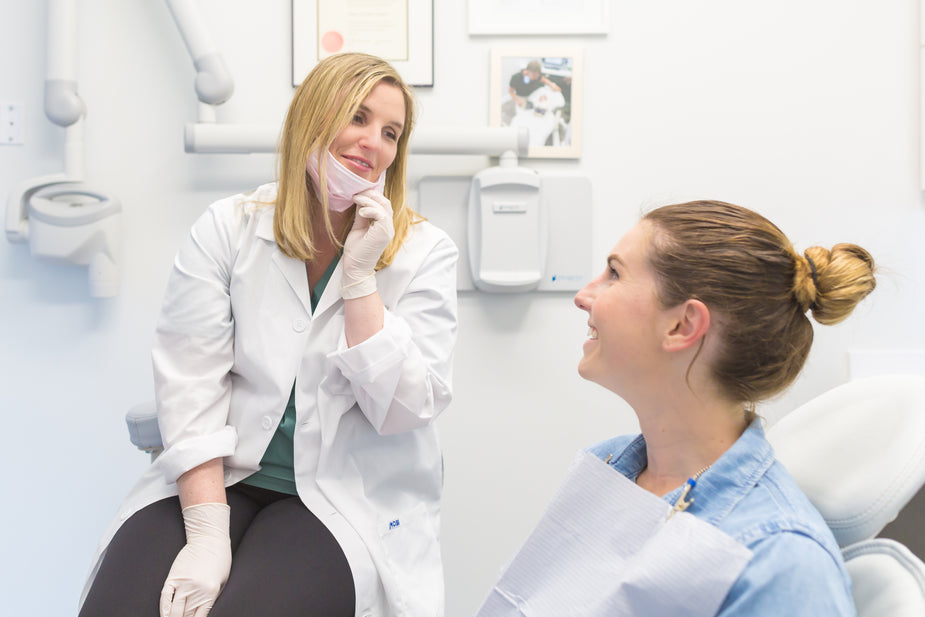
Should you get an online dental second opinion or see another dentist in person? A dentist compares accuracy, cost, convenience, and the published evidence behind each option — anchored in the ADA Code of Ethics and peer-reviewed research on diagnostic variability.
Reviewed by the toothcheck Dental Team Independent dentist providing online second opinions.Reviewed by the toothcheck Dental Team Independent dentist providing online second opinions.
Online vs In-Person Dental Second Opinion: Pros, Cons & How to Choose
If your dentist has recommended a major procedure -- a root canal, multiple crowns, implants, or full-mouth reconstruction -- and you want a second opinion before committing, you have two real options:If your dentist has recommended a major procedure -- a root canal, multiple crowns, implants, or full-mouth reconstruction -- and you want a second opinion before committing, you have two real options:
1. See another dentist in person 2. Get an online review from an independent dentist1. See another dentist in person 2. Get an online review from an independent dentist
Both options are better than blindly accepting the first recommendation, but they are fundamentally different in cost, convenience, depth, and structural independence. This guide walks through the trade-offs so you can choose the right one for your situation.Both options are better than blindly accepting the first recommendation, but they are fundamentally different in cost, convenience, depth, and structural independence. This guide walks through the trade-offs so you can choose the right one for your situation.
Quick Answer
Choose an online second opinion when your case is straightforward (existing X-rays are available, the question is diagnostic, and you are not in an emergency). Choose an in-person second opinion when you need a physical exam, do not have recent imaging, or your symptoms require tactile testing (tapping, probing, bite analysis).Choose an online second opinion when your case is straightforward (existing X-rays are available, the question is diagnostic, and you are not in an emergency). Choose an in-person second opinion when you need a physical exam, do not have recent imaging, or your symptoms require tactile testing (tapping, probing, bite analysis).
Both are valid. The right answer depends on your specific situation.Both are valid. The right answer depends on your specific situation.
The Structural Problem With Free In-Person Second Opinions
Here is what no dental marketing material will tell you: a "free second opinion" from another local dental practice is structurally different from an independent review.Here is what no dental marketing material will tell you: a "free second opinion" from another local dental practice is structurally different from an independent review.
The foundational work by Bader and Shugars in the Journal of Dental Research (1993) examined 1,187 teeth in 43 patients evaluated by an average of 6.6 different dentists each, and documented substantial disagreement on which teeth needed restorative treatment. The follow-up 1995 Journal of Public Health Dentistry review puts treatment-plan variance at 30–50% between dentists on the same case. This happens not because any dentist is being dishonest, but because every dentist has inherent biases shaped by training, practice style, and — critically — the financial incentives of their practice model.
The 2022 JADA paper "How to manage the principal-agent problem in dentistry"00188-X/fulltext) lays out the economics directly: when a clinician's income depends on the procedures they recommend, the structural conflict is built in, even when the individual clinician is acting in good faith.
The American Dental Association Code of Ethics states explicitly that a dentist providing a second opinion "should not have a vested interest in the ensuing recommendation." A second dentist in private practice who would perform the work themselves has that vested interest by definition.
Online second opinion services that charge a flat review fee and do not perform any procedures remove this structural conflict entirely. The reviewer is paid the same regardless of what they recommend.Online second opinion services that charge a flat review fee and do not perform any procedures remove this structural conflict entirely. The reviewer is paid the same regardless of what they recommend.
For a deeper look at this structural independence question, see our guide on Independent Dental Second Opinion: Why It Matters That the Reviewer Isn't Selling You Anything.
What Each Option Actually Costs
In-Person Second Opinion
A standard new-patient exam with X-rays typically costs:A standard new-patient exam with X-rays typically costs:
- Exam fee: $50 to $150Exam fee: $50 to $150
- Full set of X-rays: $100 to $250Full set of X-rays: $100 to $250
- Total: $150 to $400 out of pocketTotal: $150 to $400 out of pocket
Some practices offer a "free second opinion" as a loss leader. When you encounter this, ask: what happens if you decide the recommended treatment is correct? Will the same dentist do the work? If so, you are not getting an independent opinion -- you are getting a sales consultation.Some practices offer a "free second opinion" as a loss leader. When you encounter this, ask: what happens if you decide the recommended treatment is correct? Will the same dentist do the work? If so, you are not getting an independent opinion -- you are getting a sales consultation.
Online Dental Second Opinion
Online services pricing varies; toothcheck specifically charges:Online services pricing varies; toothcheck specifically charges:
- X-ray review and treatment plan review: $49 flat feeX-ray review and treatment plan review: $49 flat fee
- No additional charge based on plan complexityNo additional charge based on plan complexity
- No travel, no time off work, no new X-rays neededNo travel, no time off work, no new X-rays needed
The key difference: the online reviewer has no procedural revenue tied to your treatment decision. Their entire business model is the review itself, not the follow-up treatment.The key difference: the online reviewer has no procedural revenue tied to your treatment decision. Their entire business model is the review itself, not the follow-up treatment.
Cost Comparison Summary
| Factor | In-Person | Online (toothcheck) | |--------|-----------|---------------------| | Upfront cost | $150 – $400 | $49 flat fee | | New X-rays required? | Usually yes | No | | Time commitment | 1–2 hours + travel | 15 minutes upload | | Wait for results | Same day | Under 72 hours | | Procedural revenue at stake for reviewer | Yes (if treatment performed) | No (flat fee, review-only) || Factor | In-Person | Online (toothcheck) | |--------|-----------|---------------------| | Upfront cost | $150 – $400 | $49 flat fee | | New X-rays required? | Usually yes | No | | Time commitment | 1–2 hours + travel | 15 minutes upload | | Wait for results | Same day | Under 72 hours | | Procedural revenue at stake for reviewer | Yes (if treatment performed) | No (flat fee, review-only) |
Accuracy: What the Research Says
A common concern about online second opinions is whether a dentist can accurately evaluate your case without physically examining you. The answer depends on what question you are asking.A common concern about online second opinions is whether a dentist can accurately evaluate your case without physically examining you. The answer depends on what question you are asking.
What Can Be Accurately Reviewed Remotely
Dental X-rays are the foundation of most dental diagnoses, and modern dental imaging is high-resolution digital data — a JPEG or DICOM file is the same on a screen anywhere in the world.Dental X-rays are the foundation of most dental diagnoses, and modern dental imaging is high-resolution digital data — a JPEG or DICOM file is the same on a screen anywhere in the world.
A 2024 randomised controlled trial published in PMC directly compared AI-based software to independent human interpretation on intraoral radiographs and found experienced human dentists achieved high diagnostic accuracy reading the images — without being in the same room as the patient. A separate diagnostic accuracy study on panoramic radiographs in PMC found AI panoramic interpretation comparable to human reference in detection accuracy across common findings.
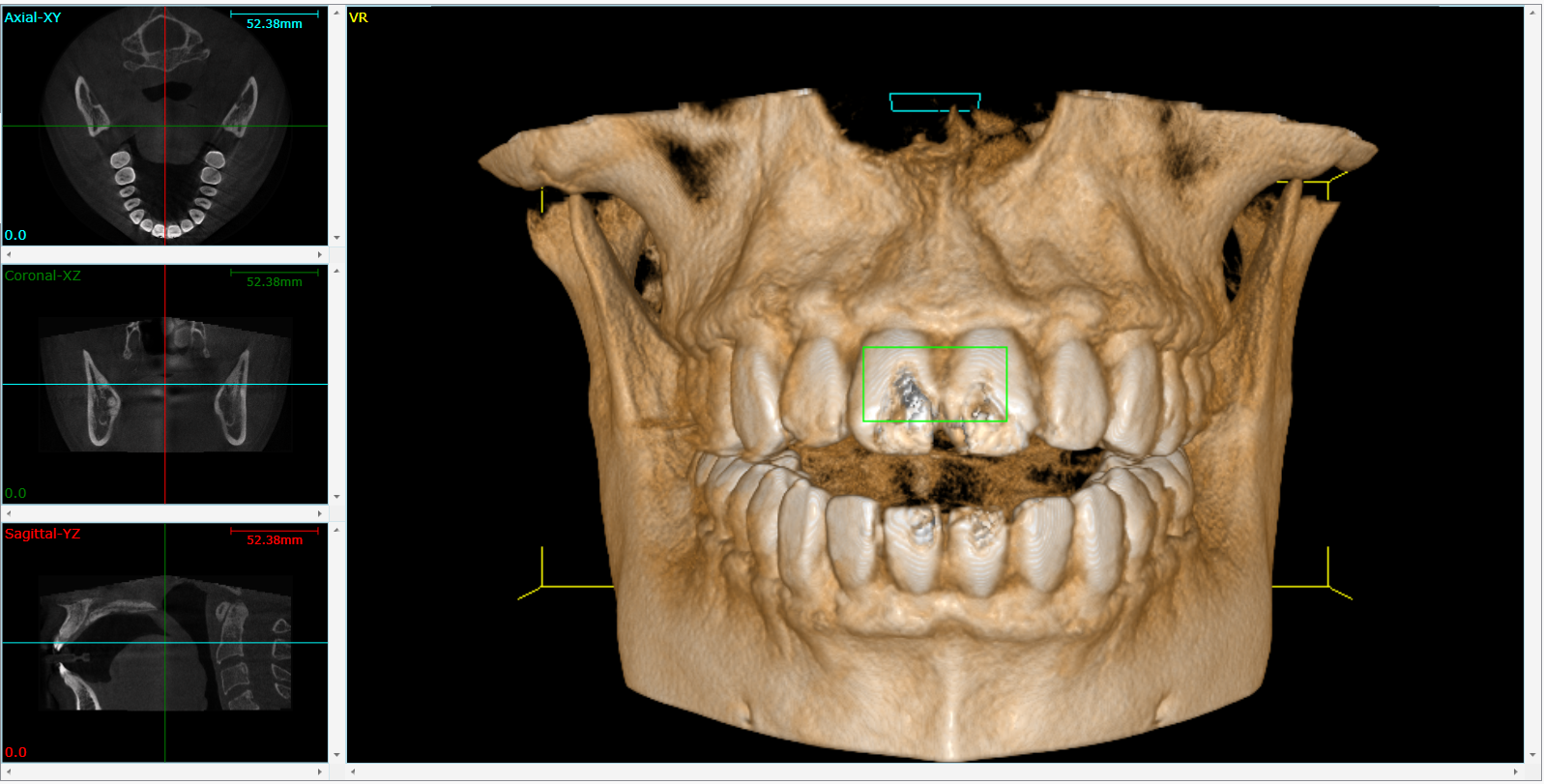
What an online reviewer can do with your X-rays:What an online reviewer can do with your X-rays:
- Identify cavities and their depthIdentify cavities and their depth
- Assess bone levels around teeth (using the cemento-enamel junction to alveolar crest distance, the American Academy of Periodontology 2018 staging framework)
- Detect periapical pathology (infections at the root tip), evaluated against the American Association of Endodontists clinical guidance
- Evaluate existing restorationsEvaluate existing restorations
- Determine whether a proposed treatment plan is supported by the imagingDetermine whether a proposed treatment plan is supported by the imaging
- Identify signs of overtreatmentIdentify signs of overtreatment
What Requires an In-Person Exam
Some diagnostic information cannot be obtained from X-rays alone:Some diagnostic information cannot be obtained from X-rays alone:
- Bite analysis -- How your teeth come together when you close your mouthBite analysis -- How your teeth come together when you close your mouth
- Periodontal probing -- Measuring gum pocket depths (though these are often charted by your treating dentist)Periodontal probing -- Measuring gum pocket depths (though these are often charted by your treating dentist)
- Cold/heat sensitivity testing -- Whether the nerve responds normallyCold/heat sensitivity testing -- Whether the nerve responds normally
- Percussion testing -- Tapping teeth to determine which one hurtsPercussion testing -- Tapping teeth to determine which one hurts
- Palpation -- Feeling for swelling or tendernessPalpation -- Feeling for swelling or tenderness
- Crack detection -- Some cracks are visible only under specific lighting and magnificationCrack detection -- Some cracks are visible only under specific lighting and magnification
If your treating dentist has already performed most of these tests and documented the results, an online reviewer can use that information alongside your X-rays. If no testing has been done at all, an in-person exam may be more appropriate.If your treating dentist has already performed most of these tests and documented the results, an online reviewer can use that information alongside your X-rays. If no testing has been done at all, an in-person exam may be more appropriate.
The Evidence on Inter-Dentist Disagreement
The reason second opinions matter at all is that dentists frequently disagree on the same clinical data. This is not a criticism of the profession — it is a well-documented phenomenon in peer-reviewed literature.The reason second opinions matter at all is that dentists frequently disagree on the same clinical data. This is not a criticism of the profession — it is a well-documented phenomenon in peer-reviewed literature.
Research on diagnostic variability across dentists has found:Research on diagnostic variability across dentists has found:
- Caries detection agreement between dentists reading the same X-rays varies widely depending on examiner calibration and lesion depth. Some bitewing-interpretation studies in PMC report kappa coefficients as low as 0.26–0.32 ("fair agreement at best"), while well-calibrated cohorts reach 0.65–0.86. Agreement is highest on advanced caries and well-trained examiners, lowest on borderline lesions in routine clinical settings.
- Treatment planning for the same patient varies substantially across practitioners, with Bader and Shugars measuring 30–50% variance between dentists on the same case.
- The more complex the case, the wider the disagreement. The Dental AI Council's 14-country survey of 136 dentists found no case where all respondents agreed unanimously on any radiographic diagnosis.
For the deeper breakdown, see Dental Second Opinion Statistics: How Often Do Dentists Disagree? and Why Two Dentists Can Recommend Different Treatments on the Same X-Ray.
This diagnostic variability is the fundamental reason independent second opinions have value — regardless of whether they are delivered in person or online.This diagnostic variability is the fundamental reason independent second opinions have value — regardless of whether they are delivered in person or online.
Convenience and Accessibility
Online Second Opinion
- No appointment needed -- upload X-rays and forms anytimeNo appointment needed -- upload X-rays and forms anytime
- No travel time or waiting roomNo travel time or waiting room
- Can be done from anywhere with internet accessCan be done from anywhere with internet access
- Results delivered in under 72 hours as a written reportResults delivered in under 72 hours as a written report
- Particularly valuable for patients in rural areas with limited access to specialistsParticularly valuable for patients in rural areas with limited access to specialists
- Ideal for patients who want a written record they can review and shareIdeal for patients who want a written record they can review and share
In-Person Second Opinion
- Requires scheduling and travelRequires scheduling and travel
- Involves waiting room time and chair timeInvolves waiting room time and chair time
- May require time off workMay require time off work
- Provides face-to-face interaction with the reviewing dentistProvides face-to-face interaction with the reviewing dentist
- Allows the reviewer to perform physical testsAllows the reviewer to perform physical tests
- Results delivered during the appointmentResults delivered during the appointment
When Each Option Makes Sense
Choose an Online Second Opinion When:
1. You have recent, good-quality X-rays -- Within the last 6-12 months. You do not need new imaging. 2. Your question is diagnostic -- Does the X-ray support the proposed treatment? Is the diagnosis correct? 3. You want structural independence -- An online reviewer paid a flat fee has no financial reason to agree or disagree with your treating dentist. 4. You want a written report -- Online reviews provide a document you can keep, share, and reference. 5. Distance or time is a barrier -- You cannot easily take time off work or travel to another practice. 6. You have already been recommended expensive or irreversible treatment -- Root canal, extraction, implant, full-mouth reconstruction. 7. You feel something is off -- The diagnosis does not match your symptoms, or you felt rushed.1. You have recent, good-quality X-rays -- Within the last 6-12 months. You do not need new imaging. 2. Your question is diagnostic -- Does the X-ray support the proposed treatment? Is the diagnosis correct? 3. You want structural independence -- An online reviewer paid a flat fee has no financial reason to agree or disagree with your treating dentist. 4. You want a written report -- Online reviews provide a document you can keep, share, and reference. 5. Distance or time is a barrier -- You cannot easily take time off work or travel to another practice. 6. You have already been recommended expensive or irreversible treatment -- Root canal, extraction, implant, full-mouth reconstruction. 7. You feel something is off -- The diagnosis does not match your symptoms, or you felt rushed.
Choose an In-Person Second Opinion When:
1. You do not have recent X-rays -- New imaging is needed. 2. Physical testing is required -- Bite analysis, percussion, cold testing that your treating dentist has not performed or documented. 3. You have complex symptoms involving multiple teeth -- The clinical picture requires hands-on evaluation. 4. You prefer face-to-face communication -- Some patients simply feel more comfortable with a live conversation. 5. The treating dentist has not performed standard diagnostic tests -- If you walk in without a clear diagnosis, an in-person exam may be the best starting point.1. You do not have recent X-rays -- New imaging is needed. 2. Physical testing is required -- Bite analysis, percussion, cold testing that your treating dentist has not performed or documented. 3. You have complex symptoms involving multiple teeth -- The clinical picture requires hands-on evaluation. 4. You prefer face-to-face communication -- Some patients simply feel more comfortable with a live conversation. 5. The treating dentist has not performed standard diagnostic tests -- If you walk in without a clear diagnosis, an in-person exam may be the best starting point.
Can You Do Both?
Yes. A common and effective approach is:Yes. A common and effective approach is:
1. Start with an online review of your existing X-rays and treatment plan 2. If the online review raises questions or suggests alternatives, discuss those with your treating dentist 3. If you are still unsure, schedule an in-person second opinion with a different provider, bringing the online report with you1. Start with an online review of your existing X-rays and treatment plan 2. If the online review raises questions or suggests alternatives, discuss those with your treating dentist 3. If you are still unsure, schedule an in-person second opinion with a different provider, bringing the online report with you
This layered approach is cost-effective because the online review often resolves the question without requiring a second chair-side visit. When it does not, you have a more focused set of questions to ask at the in-person appointment.This layered approach is cost-effective because the online review often resolves the question without requiring a second chair-side visit. When it does not, you have a more focused set of questions to ask at the in-person appointment.
Common Scenarios: Which Option Is Better?
Your Dentist Says You Need a Root Canal
Online review is appropriate first if your X-rays are available and you have symptoms. The reviewer can confirm whether the tooth genuinely requires root canal treatment or whether alternatives (filling, crown, monitoring) make more sense.Online review is appropriate first if your X-rays are available and you have symptoms. The reviewer can confirm whether the tooth genuinely requires root canal treatment or whether alternatives (filling, crown, monitoring) make more sense.
See Do I Really Need a Root Canal? A Dentist Explains for more on this specific question.
Your Dentist Says You Need Multiple Fillings or Crowns
Online review is ideal. The reviewer can compare your X-rays to the treatment plan and identify patterns of overtreatment -- something that is much harder to spot in a single in-person visit.Online review is ideal. The reviewer can compare your X-rays to the treatment plan and identify patterns of overtreatment -- something that is much harder to spot in a single in-person visit.
You Have an Active Abscess With Swelling
In-person care first. An online review can follow after the emergency is addressed, but active infections with swelling require immediate physical intervention.In-person care first. An online review can follow after the emergency is addressed, but active infections with swelling require immediate physical intervention.
A New Dentist Says You Need Much More Work Than Your Previous One
Online review is the perfect use case. An independent dentist can compare the two treatment plans against the same X-rays and tell you which recommendation is better supported by the evidence.Online review is the perfect use case. An independent dentist can compare the two treatment plans against the same X-rays and tell you which recommendation is better supported by the evidence.
You Are Considering Dental Tourism
Online review before you travel is critical. A pre-trip review of the proposed treatment plan can save you from flying internationally for unnecessary procedures. See Dental Work in Mexico: A Dentist's Guide.
Limitation of In-Person Second Opinions
The most significant limitation of in-person second opinions is structural: the reviewing dentist, unless they explicitly charge only for the consultation and do not perform the treatment, has a financial incentive to agree with the first dentist's recommendation (to capture the case) or to disagree (to capture the case themselves). Either way, the incentive is toward action, not toward restraint.The most significant limitation of in-person second opinions is structural: the reviewing dentist, unless they explicitly charge only for the consultation and do not perform the treatment, has a financial incentive to agree with the first dentist's recommendation (to capture the case) or to disagree (to capture the case themselves). Either way, the incentive is toward action, not toward restraint.
The 2022 JADA paper on the principal-agent problem in dentistry00188-X/fulltext) and the 2025 BDJ paper "Ethics on the edge: commodification, credence and care in general dental practice" lay out the economics directly — when payment depends on procedures performed, more procedures tend to be performed, even when controlling for patient health status. This is not unique to dentistry; it is a well-established finding across all of medicine. An online review that decouples the diagnostic opinion from the treatment revenue removes this structural pressure entirely.
Limitation of Online Second Opinions
Online reviews cannot:Online reviews cannot:
- Perform physical examinationPerform physical examination
- Test tooth sensitivity directlyTest tooth sensitivity directly
- Evaluate your bite dynamicallyEvaluate your bite dynamically
- Detect subtle cracks that require specialized lighting and magnificationDetect subtle cracks that require specialized lighting and magnification
- Assess gum health through probingAssess gum health through probing
If your question requires any of these elements, an online review may provide an incomplete answer. The best online services acknowledge this limitation and flag cases that warrant in-person evaluation.If your question requires any of these elements, an online review may provide an incomplete answer. The best online services acknowledge this limitation and flag cases that warrant in-person evaluation.
What to Look For in an Online Second Opinion Service
If you choose the online route, look for:If you choose the online route, look for:
1. Licensed dentists — the reviewer should be a real, licensed dentist, not an AI algorithm or an unlicensed assistant 2. Flat-fee pricing — the reviewer should be paid the same regardless of their recommendation, with no per-procedure incentive 3. Written report — you should receive a detailed written opinion, not just a yes/no answer 4. No treatment revenue — the reviewer should not stand to gain financially from any specific treatment outcome 5. under-72-hour turnaround — most legitimate services return reviews within this window 6. The reviewer does not perform procedures — if the service also does dental work, the independence is compromised1. Licensed dentists — the reviewer should be a real, licensed dentist, not an AI algorithm or an unlicensed assistant 2. Flat-fee pricing — the reviewer should be paid the same regardless of their recommendation, with no per-procedure incentive 3. Written report — you should receive a detailed written opinion, not just a yes/no answer 4. No treatment revenue — the reviewer should not stand to gain financially from any specific treatment outcome 5. under-72-hour turnaround — most legitimate services return reviews within this window 6. The reviewer does not perform procedures — if the service also does dental work, the independence is compromised
At toothcheck, every review is conducted by a licensed dentist on a flat $49 fee. The reviewer is paid the same whether the report agrees with your original plan, recommends less treatment, or recommends more. This is the structural standard for an independent review.At toothcheck, every review is conducted by a licensed dentist on a flat $49 fee. The reviewer is paid the same whether the report agrees with your original plan, recommends less treatment, or recommends more. This is the structural standard for an independent review.
FAQ
Is an online dental second opinion as accurate as seeing a dentist in person?Is an online dental second opinion as accurate as seeing a dentist in person?
For most diagnostic questions where good-quality X-rays are available, yes. Research shows remote X-ray interpretation achieves accuracy comparable to in-person reading for caries, periapical pathology, and bone level assessment. However, online reviews cannot replace physical examination for bite analysis, sensitivity testing, and crack detection.For most diagnostic questions where good-quality X-rays are available, yes. Research shows remote X-ray interpretation achieves accuracy comparable to in-person reading for caries, periapical pathology, and bone level assessment. However, online reviews cannot replace physical examination for bite analysis, sensitivity testing, and crack detection.
Will insurance cover an online second opinion?Will insurance cover an online second opinion?
Most dental insurance plans do not cover second opinions from online-only services. Some PPO plans may reimburse tele-dentistry consultations. Check with your insurer.Most dental insurance plans do not cover second opinions from online-only services. Some PPO plans may reimburse tele-dentistry consultations. Check with your insurer.
Do I need new X-rays for an online second opinion?Do I need new X-rays for an online second opinion?
No. You use your existing X-rays. This is one of the main advantages -- you avoid additional radiation exposure and cost.No. You use your existing X-rays. This is one of the main advantages -- you avoid additional radiation exposure and cost.
What if the online reviewer finds something different from my dentist?What if the online reviewer finds something different from my dentist?
That is precisely the point of a second opinion. If the online review differs from your treating dentist's recommendation, you have identified an area of legitimate clinical disagreement and can discuss it with both providers.That is precisely the point of a second opinion. If the online review differs from your treating dentist's recommendation, you have identified an area of legitimate clinical disagreement and can discuss it with both providers.
What if the online reviewer says I need in-person care?What if the online reviewer says I need in-person care?
A responsible online reviewer will tell you if your case requires hands-on evaluation. This is not a failure of the online model -- it is appropriate triage.A responsible online reviewer will tell you if your case requires hands-on evaluation. This is not a failure of the online model -- it is appropriate triage.
Can I get an online second opinion for a child?Can I get an online second opinion for a child?
Some services review pediatric cases. Check with the service before submitting.Some services review pediatric cases. Check with the service before submitting.
Should I tell my dentist I am getting a second opinion?Should I tell my dentist I am getting a second opinion?
That is your choice. A professional dentist will support your decision to seek additional input. The ADA Code of Ethics frames patient autonomy as a primary obligation.That is your choice. A professional dentist will support your decision to seek additional input. The ADA Code of Ethics frames patient autonomy as a primary obligation.
Final Advice
The decision between an online and in-person second opinion does not need to be difficult:The decision between an online and in-person second opinion does not need to be difficult:
- Have good X-rays and a clear treatment plan? Start with an online review -- it is cheaper, faster, and structurally independent.Have good X-rays and a clear treatment plan? Start with an online review -- it is cheaper, faster, and structurally independent.
- No recent X-rays or need physical testing? See another dentist in person first.No recent X-rays or need physical testing? See another dentist in person first.
- Still uncertain after either option? Do both. The combined perspective is stronger than either alone.Still uncertain after either option? Do both. The combined perspective is stronger than either alone.
The cost of a second opinion -- whether online or in-person -- is a fraction of the cost of unnecessary dental work. When a recommended treatment plan exceeds $1,000 or involves irreversible procedures, the investment in an independent review is one of the highest-return decisions you can make for your dental health and your wallet.The cost of a second opinion -- whether online or in-person -- is a fraction of the cost of unnecessary dental work. When a recommended treatment plan exceeds $1,000 or involves irreversible procedures, the investment in an independent review is one of the highest-return decisions you can make for your dental health and your wallet.
Upload your X-rays and treatment plan to toothcheck for an independent review from a licensed dentist. Results in under 72 hours. For a written treatment plan with CDT codes already in hand, use our dental treatment plan review service.
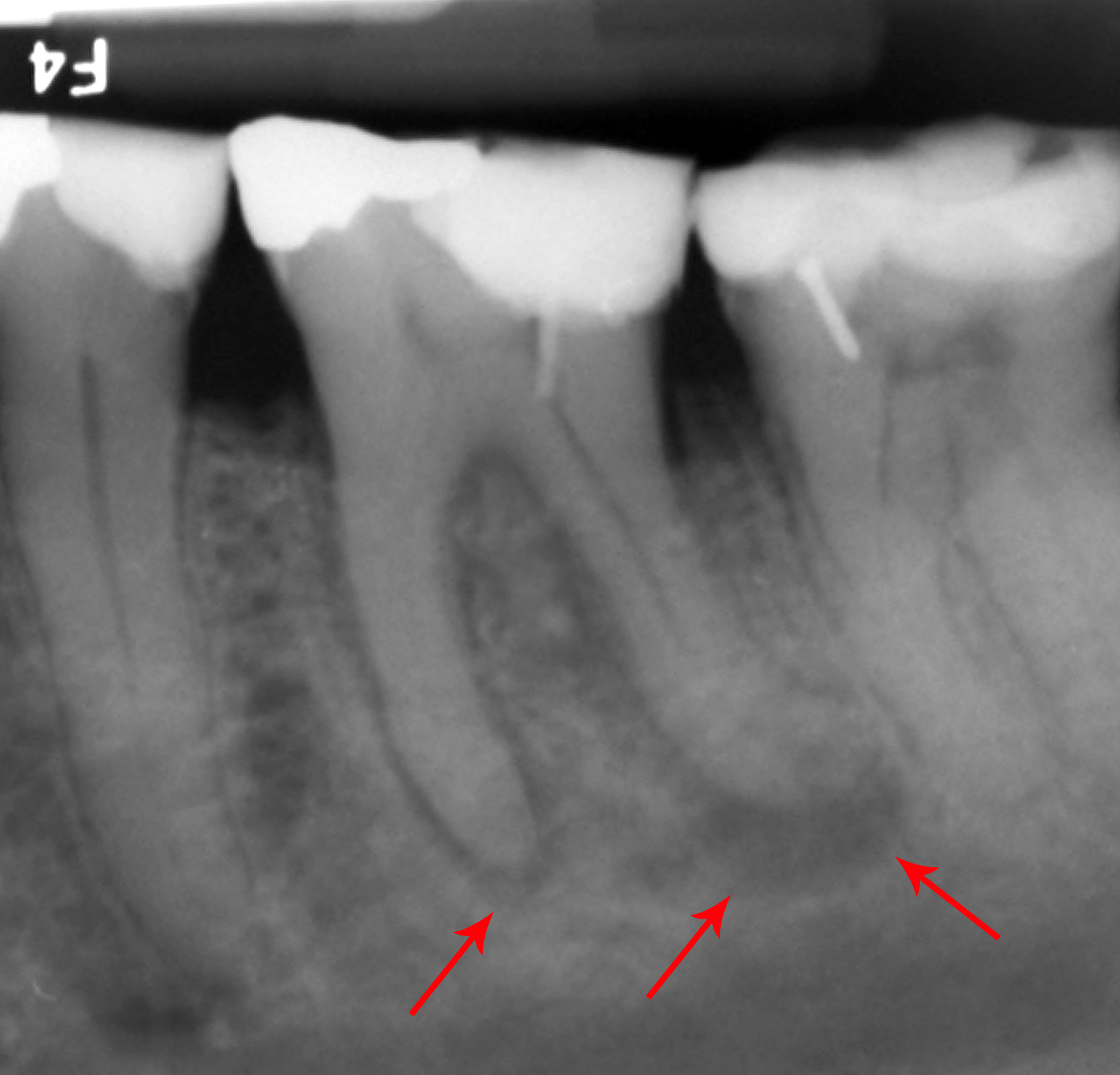
Image credits: CBCT scan image by Panda 51 via Wikimedia Commons (CC BY-SA 4.0); periapical abscess radiograph by Coronation Dental Specialty Group via Wikimedia Commons (CC BY-SA 3.0). Used as educational examples — they do not depict toothcheck patients.Image credits: CBCT scan image by Panda 51 via Wikimedia Commons (CC BY-SA 4.0); periapical abscess radiograph by Coronation Dental Specialty Group via Wikimedia Commons (CC BY-SA 3.0). Used as educational examples — they do not depict toothcheck patients.
Reviewed by the toothcheck Dental Team.Reviewed by the toothcheck Dental Team.
Last medically reviewed: May 2026Last medically reviewed: May 2026